

Notes on Cannes
A rundown of who acquired what, and what I'm adding to my Letterboxd watchlist

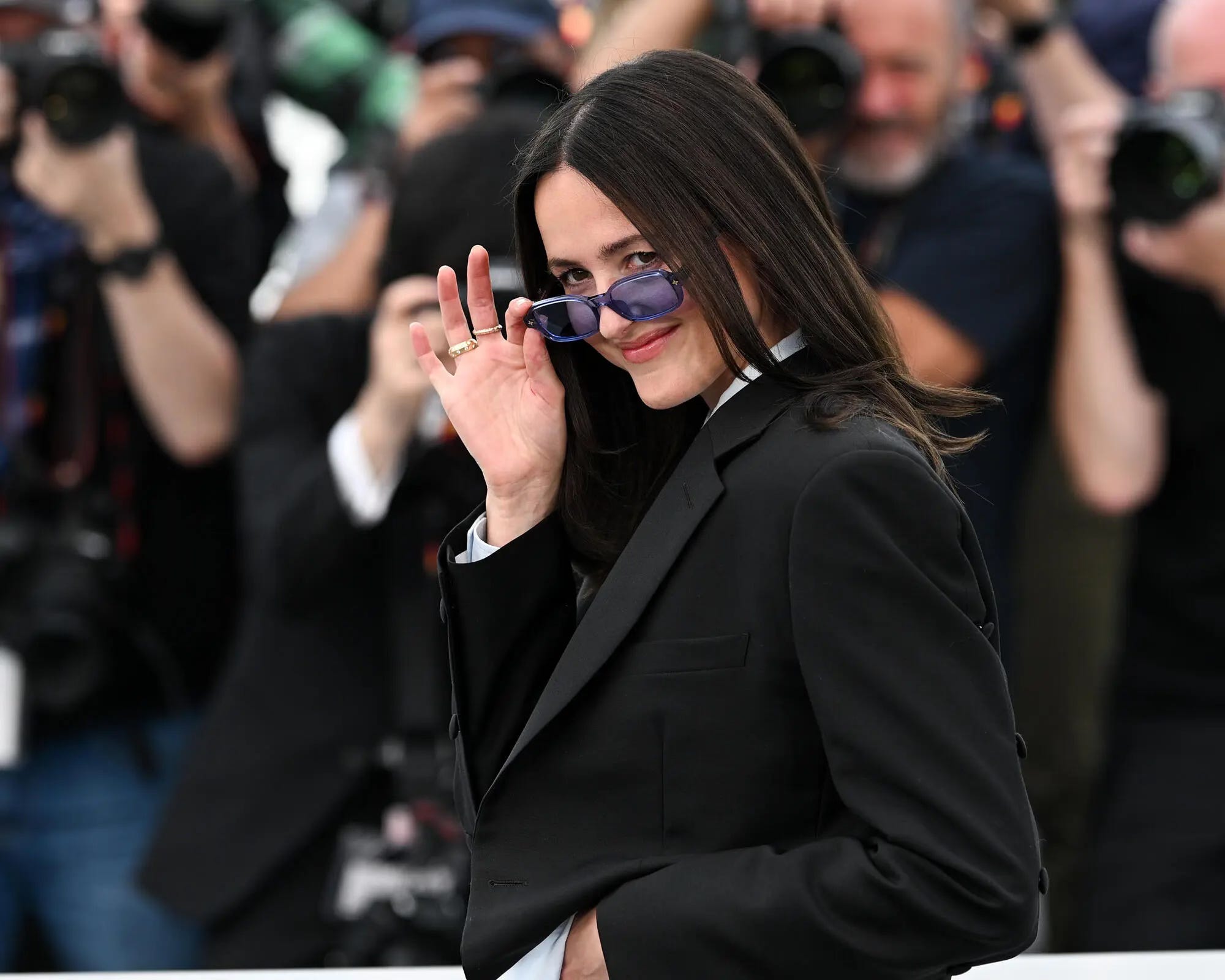
When Cristian Mungiu first won the Palme d’Or 19 years ago, it marked the emergence of an exciting new voice in contemporary world cinema. His breakout feature, 4 Months, 3 Weeks and 2 Days, tells the story of two female college students in Communist Romania attempting to procure an illegal abortion during the final years of the Ceaușescu dictatorship. Lauded then and now for its harrowing realism, the film’s legacy speaks for itself: the film sparked discussions about abortion and women’s rights across Europe, but also faced censorship upon release. In fact, critical and industry acclaim for 4 Months… was so widespread that the Academy Awards’ failure to nominate it the following year was met with outrage, leading the organization to reform its selection process for the Best Foreign Language Film category.
Nineteen years later, Mungiu joins the handful of filmmakers to have won Palme d’Or twice—and this time, it’s looking like he won’t be ignored by the Academy. His chilly courtroom drama Fjord earned the director his second Palme last Sunday, placing him among just 10 filmmakers to accomplish this feat since the festival’s inception in 1946. Starring Sebastian Stan and Renate Reinsve, Fjord tells the story of a conservative Christian couple who move from the husband’s native Romania to a remote town in the wife’s native Norway, only to find their lives upended after they are accused of abusing their children. IndieWire’s David Ehrlich described it as “a characteristically fraught and tangled drama” that, much like Mungiu’s previous feature R.M.N., sees the director deconstructing ideological and social tensions in a rapidly globalizing world.
The film is one of two major titles to emerge from the Main Competition program at the 79th Cannes Film Festival, which overall saw a relatively muted response compared to previous editions. The other is Best Director winner La bola negra, a decades-spanning historical epic from the Spanish filmmaking duo Los Javis that interweaves the stories of three gay men across different points in history. Based in part on an unfinished work by Federico García Lorca—who was assassinated by Nationalist forces at the outset of the Spanish Civil War—the film has been described as “a queer vindication” that honors the LGBTQ+ community’s forebears and celebrates its resilience over time. The film stars a promising ensemble of young male heartthrobs, but surprisingly—or perhaps unsurprisingly?—it’s Penélope Cruz who seems to be garnering the most raves, for her supporting turn as a flashy cabaret performer. Glenn Close is also said to deliver a memorable cameo.


Met with a rapturous response following its premiere, La bola negra sparked a bidding war among the major studios in attendance, from which Netflix emerged victorious, acquiring the film for a seven-figure sum. The streamer is known for throwing its full weight behind awards campaigns, and this is notably the only film on its upcoming slate likely to inspire confidence among anyone betting on the company to continue its eight-year streak of landing a Best Picture nomination at the Oscars. We can expect the film to hit theaters—and later, the streaming platform—before the year ends.
Likewise, The LA Times reports that “Neon will release Fjord in the fall, with an extensive awards campaign to follow.” Mungiu’s film is the studio’s seventh consecutive Palme d’Or winner, which has to be some kind of record. I’m conflicted on how I should feel. On one hand, the company has proven itself a strong distributor and cultivated a reputation for quality, repeatedly funding unique independent and international titles that might not otherwise receive meaningful exhibition—and actually getting audiences to watch them, proving there is a market for the kinds of films bigger studios typically avoid.
On the other hand, their moves sometimes come across as desperate. Last year, Neon entered the main competition with a heavyweight contender in Sentimental Value—only to splurge on just about every other available title, as if to ensure they wouldn’t lose. This year, they once again claimed many of the buzziest titles leading up to the fest, entering the Official Selection with nine movies—six of which competed for the Palme D’or. These included Fjord, Hope, Sheep in a Box, The Unknown, All of a Sudden and Paper Tiger, whose purchase was announced the day it was added to the lineup.
The most notable film here (besides Fjord) is probably All of a Sudden, which was helmed by Japanese filmmaker and previous Oscar nominee Ryusuke Hamaguchi, and won its lead actresses Tao Okamoto and Virginie Efira the Best Actress prize. Hopefully the studio doesn’t end up pouring all of its energy into the starry, English-language Fjord, and gives Hamaguchi’s film a proper awards campaign. Awards, as I’ve written before, provide films with a major boost in visibility. Competition between studios is also healthy, so here’s hoping a different distributor is able to expand its reach to the extent that Neon has in the near future.
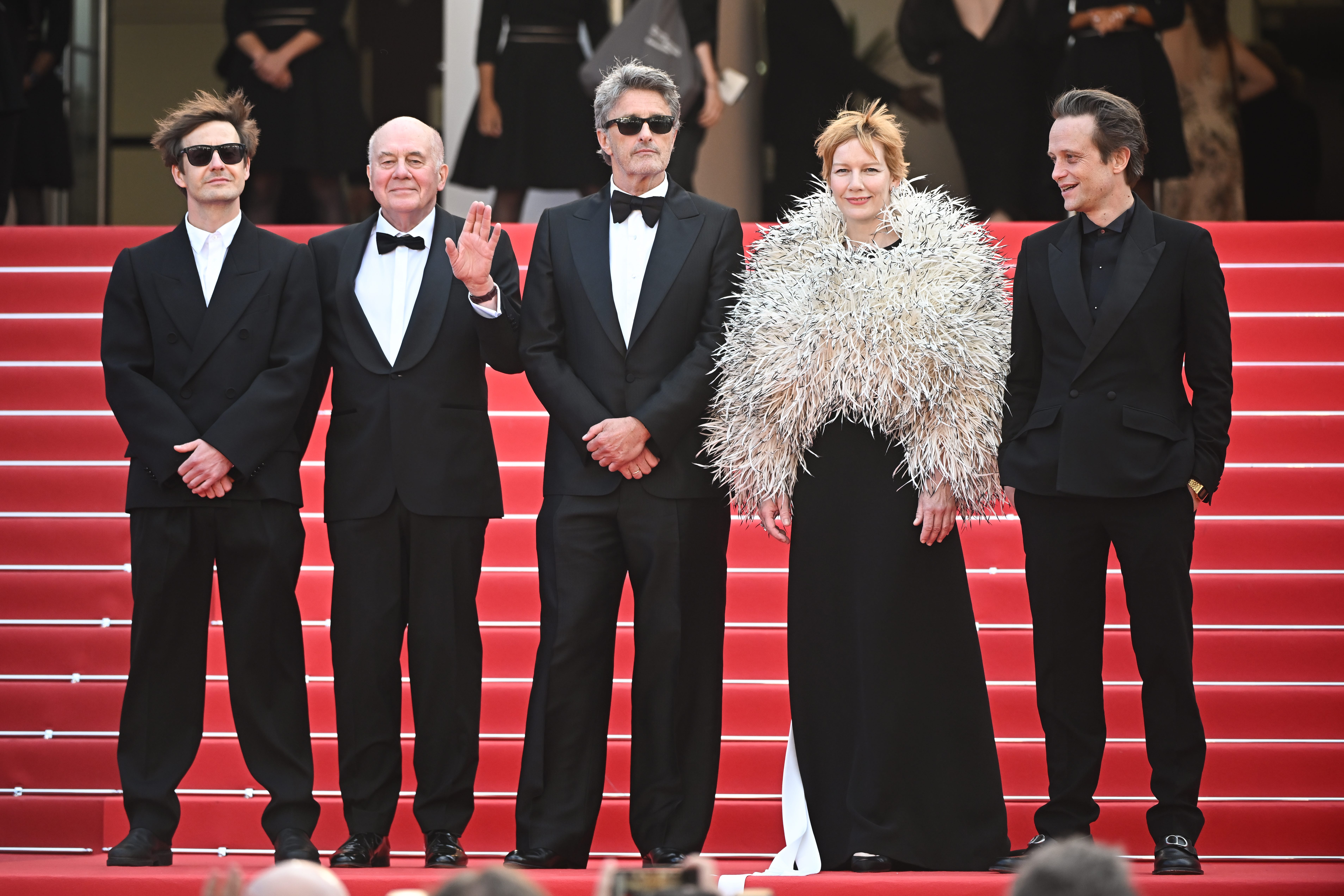
To its credit, Mubi also made a splash at the 79th Cannes Film Festival, entering the competition with several titles, including two critical darlings: Minotaur and Fatherland. Directed by Russian exile Andrey Zvyagintsev, Minotaur is set against the backdrop of the Russo-Ukrainian War and follows a business executive who discovers that his wife is having an affair. The film is a loose retelling of Claude Chabrol’s The Unfaithful Wife, which itself spun the famous American remake Unfaithful in 2002. Fatherland, from Polish filmmaker Paweł Pawlikowski, is a fictionalized account of author Thomas Mann’s road trip across Europe with his daughter, Erika. It stars German screen royalty Hans Zischler and Sandra Hüller as co-leads.
Both films nabbed awards at the festival’s closing ceremony, with Zvyagintsev winning the Grand Prix and Pawlikowski tying with Los Javis for Best Director. During the festival, Mubi also acquired US rights to Coward, Lukas Dhont’s queer World War I romance, which earned its two young leads the Best Actor prize during the festival’s closing ceremony. Outside the main competition, the company also backed Teenage Sex and Death at Camp Miasma, Jane Schoenbrun’s rapturously received postmodern slasher starring Gillian Anderson and Hannah Einbinder.
It’ll be worth seeing whether Mubi’s awards haul at Cannes acts as an incentive for more inclusive distribution. Last April, Variety reported that Mubi was partnering with the finance company IPR.VC in an effort to produce more “European auteur-driven films.” The additional funding should hopefully mean that these movies receive proper theatrical runs. Two years ago, the company generated enough enthusiasm for The Substance, Coralie Fargeat’s goopy body horror film, to propel it beyond niche audiences and all the way to the Academy Awards—a feat previously considered unthinkable for a movie like it.
I wouldn’t be surprised if they tried again this year—but with what? According to some awards pundits, their other 2026 Sandra Hüller starrer, Rose, might be the answer. Though it did not play at Cannes, that film premiered at the Berlinale in February, where Hüller won the Silver Bear for Best Actress. Hopefully I’ll see it at my local European film festival this coming November, along with Coward, Minotaur and Fatherland.


As you’ve probably already deduced, queer films ruled this year’s edition of the Cannes Film Festival, both in competition and across the parallel sections. Among the murderers’ row of Queer Palme contenders, it was Camp Miasma that ultimately took home the prize.
Pedro Almodóvar also premiered a new film this year: Bitter Christmas, starring previous collaborators Leonardo Sbaraglia and Bárbara Lennie. Reviews have been mixed so far, but the Spanish auteur’s highly anticipated latest feature is also set for release sometime in the third or fourth quarter, with Sony Pictures Classics handling distribution in the United States.
One of the buzziest films to emerge from this year’s fest is Club Kid, the late-coming-of-age dramedy from actor and influencer Jordan Firstman, which currently boasts an impressive 4.2 on Letterboxd and a perfect 100% on Rotten Tomatoes. Described to me as “gay Baby Daddy by way of Sean Baker,” the film sparked such an intense bidding war that A24 ultimately acquired it for a staggering eight-figure sum.
As for animated films, Cannes saw several notable premieres this year, including Tangles, In Waves and Iron Boy. The latter two were acquired by Netflix and Sony Pictures Classics, respectively. Tangles has yet to secure distribution, as have The Man I Love, Ira Sachs’ AIDS drama starring Rami Malek, and The Beloved, directed by Rodrigo Sorogoyen and starring Javier Bardem—live-action films from the main competition that garnered significant attention. Here’s hoping they get bought soon.
Below, see the list of winners for the 79th Cannes Film Festival. To view the winners for the short film selection, click here.
Main Competition
Palme d’Or - Fjord (dir. Cristian Mungiu)
Grand Prix - Minotaur (dir. Andrey Zvyagintsev)
Jury Prize - The Dreamed Adventure (dir. Valeska Grisebach)
Best Director - Javier Calvo and Javier Ambrossi (The Black Ball), and Paweł Pawlikowski (Fatherland)
Best Actress - Virginie Efira and Tao Okamoto (All of a Sudden)
Best Actor - Emmanuel Macchia and Valentin Campagne (Coward)
Best Screenplay - Emmanuel Marre (A Man of His Time)
Un Certain Regard
Un Certain Regard Prize - Everytime (dir. Sandra Wollner)
Jury Prize - Elephants in the Fog (dir. Abinash Bikram Shah)
Special Jury Prize - Iron Boy (dir. Louis Clichy)
Best Actress - Daniela Marín Navarro, Marina de Tavira and Mariangel Villegas (Forever Your Maternal Animal)
Best Actor: Bradley Fiomona Dembeasset (Congo Boy)
Caméra d’Or
Caméra d’Or - Ben’Imana (dir. Marie Clémentine Dusabejambo)