

INTERVIEW: ‘Esta Isla’ directors discuss cinematic influences & finding their voice
“We’re outsiders in a way—both in Puerto Rico and everywhere else.”

Editor’s Note: This interview was originally conducted in Spanish for ADocPR.com. To read the article in its original language, click here.
Talking to Cristian Carretero and Lorraine Jones-Molina, it’s immediately clear that they’re not just filmmakers, but film buffs. Like any other movie, their feature-length debut—titled Esta Isla—borrows from a rich history of cinematic influences for its story of lovers on the run. A few weeks before its re-release in Puerto Rican theaters, we meet over a video call to discuss the film’s themes, its success in the festival circuit and feedback from local audiences. When I ask about their favorite movies, Cristian reaches behind his computer for a package that looks as though it just arrived in the mail. He opens it, and pulls out three Criterion Blu-rays.
“Look at these,” he says.
“Is that Jeanne Dielman?” I ask.
“Chantal Akerman, Rashomon…Oh, and Faya Dayi. Where’s this from again? It’s really good.”
“From Ethiopia,” Lorraine says. “That was the most recent inspiration behind our movie, you could say, because we watched it just before we began filming with our cinematographer, Cedric.”
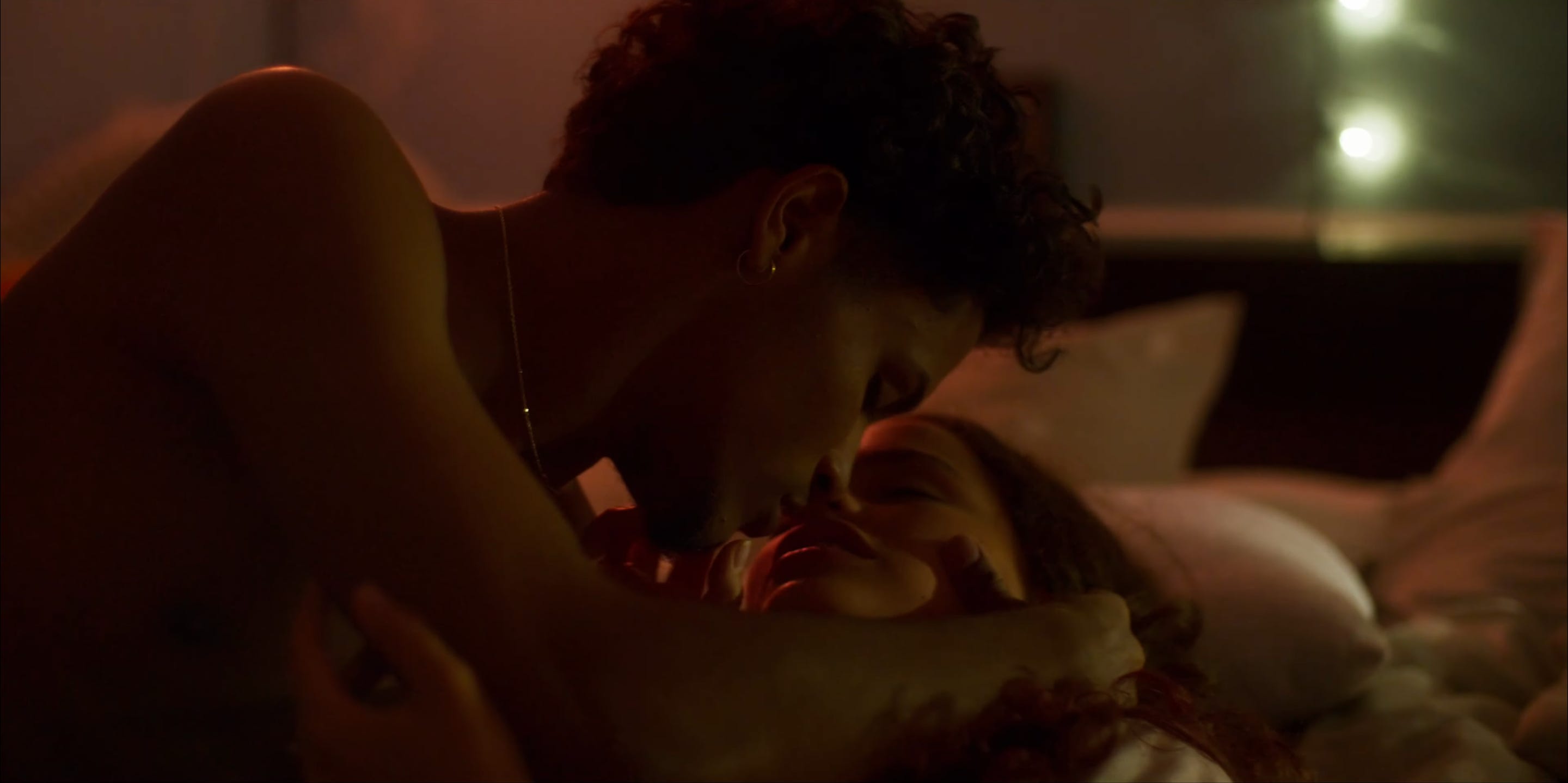
It makes sense that the dreamlike atmosphere and coming-of-age themes of Faya Dayi would have inspired Esta Isla. But make no mistake: despite their canon of influences, the film’s cultural specificity and sociopolitical concerns make it a distinctly Puerto Rican experience. It follows Bebo (played by Zion Ortiz), a teenager who cares for his grandmother (Georgina Bori) and lives with his older brother Charlie (Xavier Morales) in a public housing complex in Mayagüez, a coastal town located in the far west part of the island. Though they fish for a living, financial problems have pushed the brothers into the business of selling drugs. On a night out at a local bar, Bebo meets Lola (Fabiola Brown), a disillusioned girl from a wealthy family with whom he connects immediately. But when his secret life catches up to him, Bebo finds himself with no choice but to flee—with Lola by his side.
Taking us from the cerulean shores of Mayagüez to its tropical forests high in the mountains, the film then introduces us to a series of characters who help Bebo and Lola on their journey. These include a dominican immigrant named Coti (Jonnie Mercedes), and Cora (Teófilo Torres), a farmer who takes them in and teaches them the ancestral methods he uses to tend his crops. These players embody a number of ideas heavy in the consciousness of Puerto Rico and the Caribbean at-large, including a history of colonialism whose effects—be it mass migration or the erasure of precious traditions—can be felt on both a macro- and microcosmic level. It comes as no surprise then, that both directors consider authenticity to be an inherent responsibility of every filmmaker.
“When we visualize and recognize ourselves, we empower ourselves,” Lorraine tells me over Zoom.
Their efforts to create something real have more than paid off. Esta Isla had its world premiere at the Tribeca Film Festival, where it won awards for Best Cinematography and Best New Director, on top of receiving a special jury mention. Among other accolades, the film also triumphed at the Independent Spirit Awards this past February, where it won the John Cassavetes Award, which goes to the best film made under $1 million.
You can read our full conversation below. Esta Isla is currently showing in select cinemas, and is set to release digitally this August.
This interview has been edited for length and clarity.
First off, congratulations on everything you’ve accomplished with Esta Isla. How does it feel to bring the film to theaters, and for Puerto Ricans to have the opportunity to see it?
CRISTIAN CARRETERO: After Tribeca, we traveled to several countries and festivals, to understand the effect that the film is having on audiences, and see its messages and the more implicit elements of it reflected in its reception. But ultimately, bringing it here, to Puerto Rico, was the original goal. It’s nice to see how people react, and to watch the film come to life, in a way. Many have gone on to see it three or four times, and have found a part of themselves in it.
LORRAINE JONES-MOLINA: That whole journey was incredible. The awards, the recognition and the validation were magical. But it wasn’t until after that first press screening [in Puerto Rico] that I started to cry. When we got home that night and some of the press reactions started coming in, I understood that this was the real goal: for the film to connect deeply with Puerto Ricans, first and foremost. Many are taking it to other levels that surpass even our expectations or intentions, giving it another life. That’s the purpose of making [films], right? For each person to take it for themselves, and create something new from it.
CC: Yeah, for the film to grow inside the person. That they continue to think about it, that they talk about it, and that they want to see it again.
LJM: It’s like the films we enjoy.
Was there a particular reaction that spoke to you?
LJM: We’ve received so many beautiful messages. After one of the first screenings in New York, this girl came up to me, gave me a hug and said, “I’m from Venezuela, and it touched me too.” I feel that there’s a lot of disconnection in Puerto Rico. Sometimes we’re more connected to the United States but not with our closest brethren, who we share similar experiences with. But in that moment, I felt her pain, and my own as well. There was so much healing. That’s part of the reason why I believe so much in cinema.
[The Puerto Rican actor] René Monclova also said some beautiful things about the movie on Chente [Yadrach’s] program. He’s someone we admire a lot, and I loved what he said about Puerto Rico—about being able to appreciate all these beautiful things, but also the things that don’t work due to the chaos and crises we experience. There are also people who say things like, “That’s my grandfather!” or “That’s my grandmother!” or who connect with characters like Lola, Bebo and Moreno.
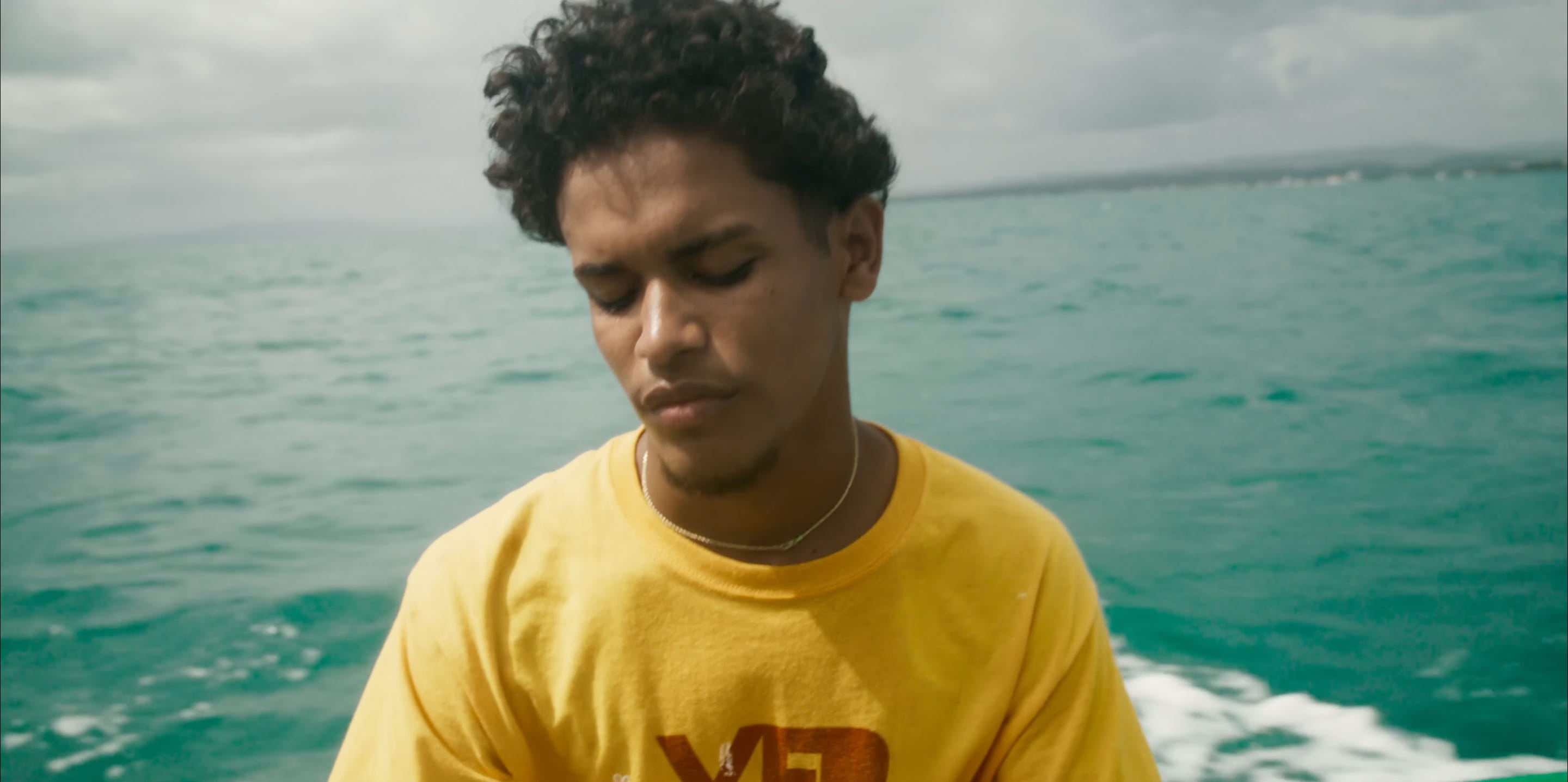
CC: I’m always interested in how people take art and make it their own. How you assimilate [to a movie] depends on your life, your background and whatever you are experiencing in that moment.
I think that, since [Esta Isla] is set up in a very intimate way, people manage to penetrate the screen and enter the story, whereas other films are maybe told more from the outside, or their artifice doesn’t allow the audience to enter. We were very careful about that, in terms of the realism being shown in a way that’s visually poetic.
I like the story about the Venezuelan fan, partly because my family is also from there, but more so because I think it connects to the themes of Esta Isla, which also touches on the issue of immigration and the topic of cultural exchange. In addition to the Coti character being Dominican, Bebo also mentions that his father was from the DR. Did you write the film hoping that people in other parts of the world would identify with it?
CC: It was more that we wanted to say something. I have had the opportunity to travel to many of the Caribbean islands—this giant archipelago that we have. It was the dream of many of our leaders in Puerto Rico—like [Ramón Emeterio] Betances—and the Caribbean at-large to unify the Caribbean and see ourselves as one land. Although we have different histories and we sometimes speak different languages, we’re all here and it would be beautiful if we had a greater connection, culturally, politically, economically and socially.
There is also the idea of the Caribbean as a fluid space: Dominicans move here, Puerto Ricans go there, etc. We wanted to explore that Antillean idea and, in some way, through those characters, show that connection we have with the rest of the Caribbean and with Latin America. We also wanted to show dignity—to recognize these connections that we have with our Dominican brothers, or those from any other country.
LJM: We tried to do something very sincere, very specific, very real and very local—and I think that through this, we can connect with our neighboring countries, because we experience so many similarities. I feel that watching each other’s cinema helps us understand how close we really are, and how much we’re alike.
Recently, we went to the Panama Film Festival, where the movie was screened twice. In the second presentation, two things happened: first, the projectionist from that theater came to me and told me that, of all the movies he’d seen, ours was his favorite. Afterwards, a girl in the audience said: “hey, I just want to tell you that everything that happened there is so like Panama.” How nice is it when we recognize how close, and how alike, we really are?
Another thing that caught my attention was the spiritual aspect of the film, starting with Bebo and Charlie’s grandmother, who lights saint candles and prays to the Virgin of Carmel. It’s a strong contrast to how Latinos are represented in so many American and European films, which typically depict faith in our communities in very superficial ways.
CC: They always show that same image of the Virgin of Guadalupe…
Yes! I always think back to the final scene of Emilia Pérez, when they show a procession with someone carrying the image of the Virgin, but it isn’t meant to signify anything other than the fact that the people of this culture are religious.
CC: Boom…Mexico!

Right. So tell me about the cultural specificity regarding the spiritual aspects of this film.
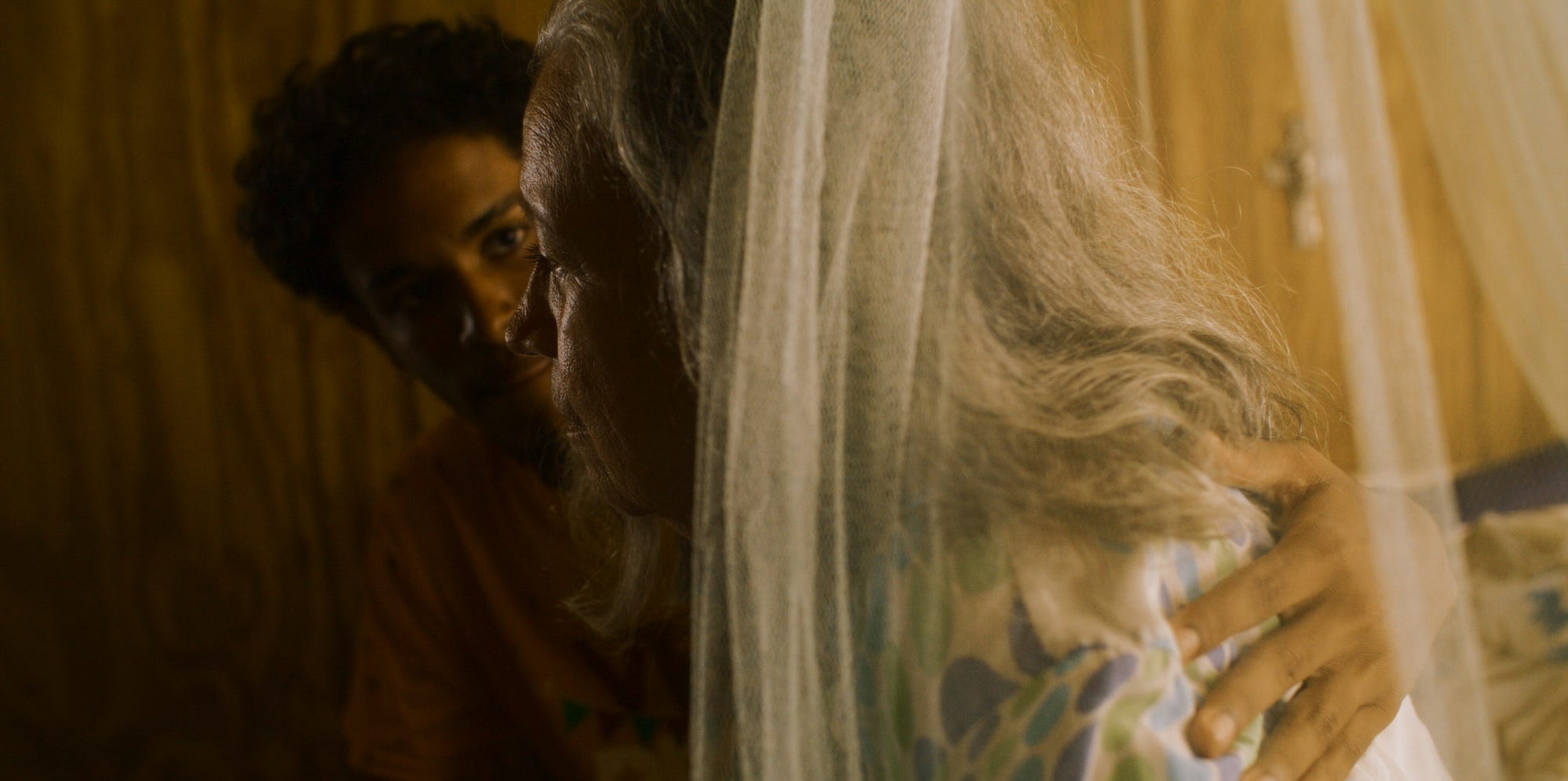
CC: We wanted to show this crazy spiritual mix that exists in the Caribbean. It’s there when those symbols appear, and also when they don’t. At the beginning, we see how [Bebo’s] grandmother is like a medium when she wakes up and says that Ceci [her deceased daughter] came into her bedroom to tell her that something [bad] will happen to Charlie.
The figure of the Virgin of Carmel gets repeated a lot; she prays to her, and then later there’s a procession, which occurs in all fishing villages. We were interested in this figure that protects the fishermen, and anyone who goes out to sea during a storm. It’s very symbolic. That’s life: when we throw ourselves into the unknown, it’s the Virgin who protects us, and helps us return safely to the port.
There are also the promises. That comes from Catholic Spain, but has been creolized. Now all kinds of figures are used—not just the king but any spiritual forces that exist, who we ask for help. There are various saints, and some mix elements of Afro-Caribbean religions. Charlie also wears some Santero necklaces when they’re around the fire and when they go fishing.
We also cover the caves, and this spiritual thing the Tainos had. I was very interested in that spiritual—not necessarily religious—aspect of all these influences that have crossed our land. It’s there in nature, in those frames where nothing is being said. Like God, who exists in the river, in the plants, in the air and in the water.
LJM: Puerto Rico and the Caribbean have this very interesting spirituality. I feel that this isn’t discussed much; there’s talk about Puerto Rico being Christian-Catholic, and that’s it. But that’s dishonest—there’s so much more. The character of the grandmother is also very personal to me. I feel like a lot of our grandmothers have that experience of feeling and knowing things. I wanted her to have that, and for it to be real: if she says something, you know it’s true, even if you don’t understand [why it’s true].
I want to talk about your decision to set the film in Mayagüez. I know that you both live in the municipality, and that Cristian grew up there—is that right?
LJM: Yes. We were observing how the cinema here feels different; what the vibe, the flow, the people, the history and the culture are like. Everything is always concentrated in the metropolitan part of Puerto Rico, and there are people who don’t know much about what happens in the other areas.
CC: That’s true. We want to decentralize film production, and leave the bubble that is the film world in San Juan. Here we have family, we’re comfortable—it’s all cool. If I want to make a movie, I connect with the community and people get pumped. They open doors for you, they tell you stories; they want to be a part of something and help in whatever way they can. Many of the stories we put in the script were things that the people here told us, or that we had experienced ourselves. I grew up watching people hunt crabs with flashlights at night, and all that stuff...
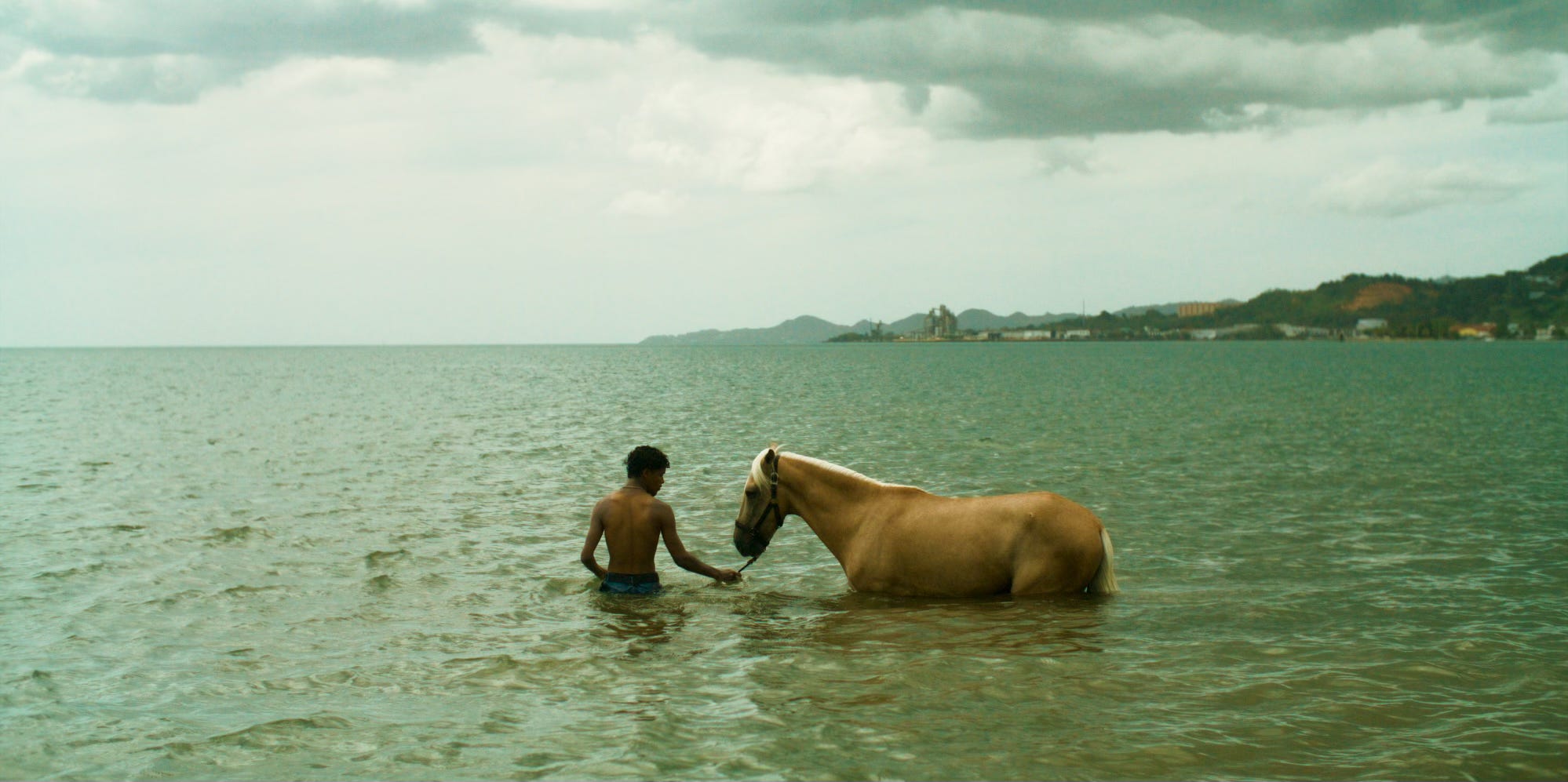
LJM: That’s very cinematic. Or for instance: Bebo bathing his horse [in the sea]. That’s something you’re not necessarily going to see in San Juan, but you see it all the time here.
CC: Also, Columbus Landing—the housing complex where Bebo lives with Charlie and his family—was the second residential complex ever built in Puerto Rico, so it’s pretty old. It has beautiful ceiba trees all over the place, and faces the sea. There is this abandoned elementary school, which has been turned into a stable compound [for livestock]. That’s already a whole microcosm that lets you visualize, for example, the kid who works taking care of the horses, crossing the slums to get to the beach—where they dunk him in the water so that he exercises, and gets stronger. All of that storytelling comes from this space. So that’s one example of how filming in these locations adds cinematic value that compliments the story.

Speaking of sources of inspiration, I caught the two of you in a Letterboxd video recently, where you talked about your favorite independent films. I remember Cristian mentioned Y tu mamá también and Amores perros being two movies that motivated him to become a filmmaker. Are there any others that influence your work?
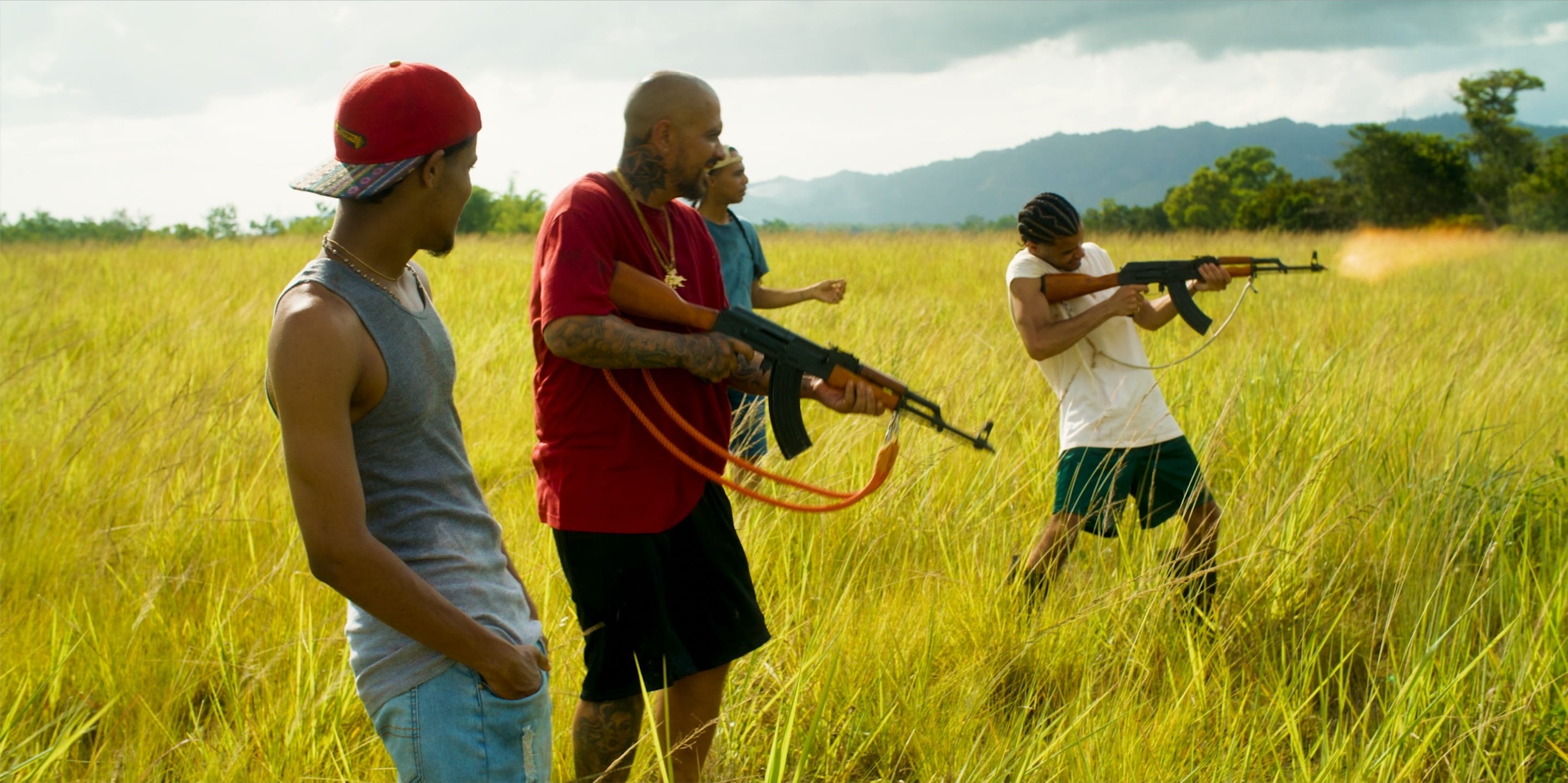
CC: The structural basis of what we wanted to do was: “Lovers on the Run” meets “Coming-of-Age.” We were drawn to Badlands by Terrence Malick, and movies that featured young people fleeing. In a way, films like Bonnie and Clyde (and others like Thelma and Louise, which is a little different) are road movies that also get into moral dilemmas. There’s always this philosophy of what’s wrong and what’s right—and also of youth, and where we are headed. You have this combination of ingredients that lets you talk about certain topics while also maintaining this freshness of youth, and a structure that allows you to go on an adventure.
LJM: They’re deep and philosophical, but in an entertaining way. It was always our intention to talk about problems that exist in Puerto Rico, both political and historical, as well as philosophical: what is freedom? The idea was to make it for the general public, and not just the art world. That’s why we thought of these genres, and why we were influenced so much by these films.
Y tu mamá también is another one of those inspirations. We loved how, whenever [the characters] stopped at a business, we’d catch just a little bit of what the people in those communities were like, with this sense of magic [and] wonder. So that was a big influence too. And City of God is definitely another.
CC: We wanted to show the coming-of-age of not only the characters—but also of a society that’s still in the process of understanding itself, of discussing [our colonial status], and our future. In films like Y tu mamá tambien and Amores perros, context is just as important: they’re representative of Mexico during that time. You understand the contemporaneousness of when those films were made, and they remain iconic still now.
LJM: We were also inspired by Italian Neorealism and the French New Wave; Bresson’s Pickpocket is tucked in there.
CC: Italian Neorealism for its focus on working class themes, on using real locations, on recording with little equipment and working with natural actors, and for mixing documentary with fiction. And the French New Wave for its playful element—that way of breaking conventions and tricking [audiences], in a way.
There is also Andrei Tarkovsky, who has this spiritual thing in his shots, and in his themes: the use of elements like fire, water, earth and air so that they affect the scenes, and so that you feel them.
I see Italian neorealism as being very influential to Latin American cinema over the last couple of decades. Many such films have also been made in Venezuela—like Pelo malo, for example.
CC: Yeah, exactly. Well, it’s also because there’s no resources—but at the same time, it’s like a necessity. Italian Neorealism has been very influential during Latin American dictatorships. There’s also the New Latin American Cinema wave, Third Cinema, Poor Cinema and the Aesthetic of Hunger in Brazil—all these movements of using cinema to reflect reality, instead of trying to imitate that splendor of Hollywood while people die of hunger and our governments kill us or take away our resources and our indigenous cultures, damnit! [It’s about] dignifying that, by making films that don’t depend on all this machinery—just using a camera and a microphone, and that’s it. As though it could even be considered immoral to do the opposite.
Changing gears a bit, your film has obviously received tons of acclaim. Among the honors, y’all won an Independent Spirit Award (more specifically, the John Cassavetes Award for the best film made under a budget of less than $1 million). How does it feel to see your work being recognized like this, and how did you celebrate this accomplishment?
CC: Yeah, man. The thing is, we started out like that. We’ve been spoiled, because it all began in Tribeca, where they gave us three awards and we were like, “holy shit…what now?”
LJM: [laughs] It’s always a surprise.
CC: It brings a certain validation. Like, we must be doing something right if the public understands [the movie], and if these industry people—who in theory have seen a lot, and know a ton—are also finding value in it and giving it awards, despite all of this other competition.
LJM: We were obviously competing with filmmakers who were already in that world [of Hollywood]. Because it’s the Independent Spirit Awards, this prize is very special and important. We’re outsiders in a way—both in Puerto Rico and everywhere else. From the beginning, we wanted to do something different: shoot in the west. And we had a great team, but other than that, there wasn’t a lot of support. Right now, a lot of movies are getting made with funding from ARPA. The government granted us $150,000—but there are films that receive $1.7 million or more. So we’ve accomplished a lot, with much less.
When we received that award, it was like, “OK, now I get it; everything happened for a reason.” It feels nice to go against the tide and make something genuine that you really believe in, and not not give up—and then, at the end of the day, for that to get acknowledged. It’s been really beautiful. And to go so far as to not only get recognized, but also awarded, has been incredible. It was the first time a Puerto Rican film entered that space—and we won!
CC: It was awesome, because we were watching the show, everyone was having a great time and all of the sudden this guy from the production team comes over and asks us, “um, are you guys the Esta Isla crew? There’s two more awards and then it’s your guys’ award, so don’t go anywhere.” So I asked Lori, “does this mean we’re winning?” and she was like, “I don’t know.” And then this camera operator came to set up in front of us, and I was like, “oh shit. Prepare yourself Lori, because I think it’s happening.” Thank God the speech flowed well, because we had [written] something in case we needed it.
Afterwards, we went backstage and Kate Hudson was there, and she congratulated us. At the afterparty, people kept telling us that this was the most important award ‘cause that’s like the spirit of independent filmmaking, baby: going out there, guerilla-style, and just doing it. It’s super cool that, in your journey of admiring Hollywood, you then get these actors and directors who are also attending the Oscars, coming up to you and saying: “I love what you’ve done.” At the same time, it goes to show that sometimes we have to listen to our own voices, and trust what it is we have to say. This is a film from Mayagüez, about class and the daily struggles of these two kids who fall in love. That the industry recognized it means that the game is not played trying to be like them, but by making something of your own that they understand and respect. ■