

From the Archives: A Conversation With John Waters
The self-proclaimed “Pope of Trash” discusses his latest novel, an illustrious career and Ron DeSantis.

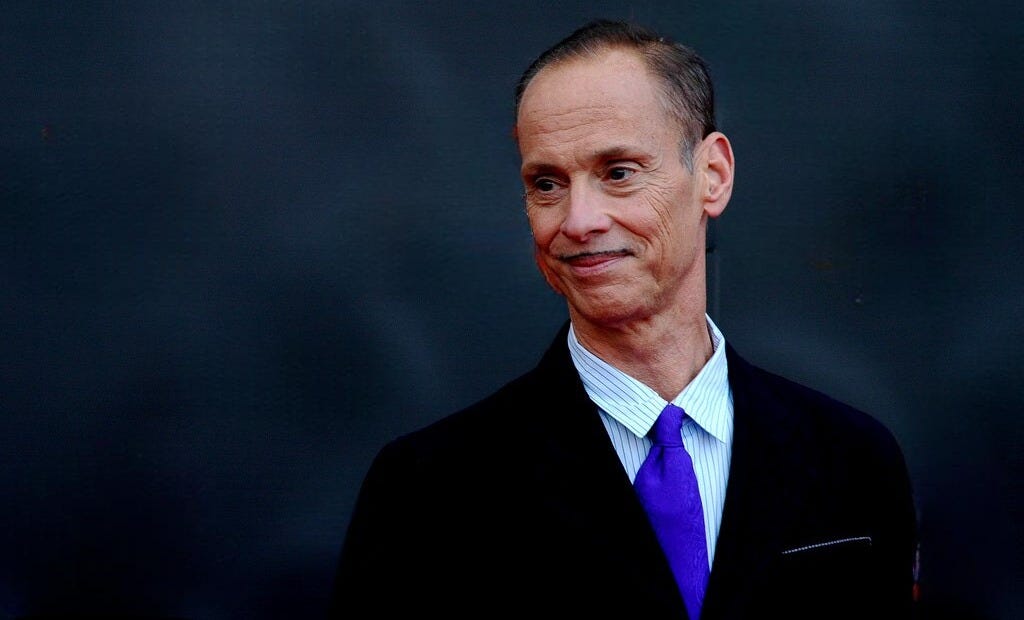

Four years ago, I came across an opportunity I never thought I’d get: the chance to interview the great John Waters. It was 2022, and I was a freelance writer for The Miami New Times’ arts and culture section. When I learned that the self-proclaimed “Pope of Trash” would be attending the Miami Book Fair to promote his latest novel Liarmouth: A Feel-Bad Romance, I jumped at the chance to reach out. To my surprise, I was granted a 15-minute phone interview with him, during which we discussed the book, his career and other shenanigans he was all too happy to entertain me with.
It was a year of considerable acclaim for the then-76-year-old author, artist and filmmaker, who had made a name for himself directing prurient, shoestring-budget shock comedies from the 1970s through the early 2000s. Following the 50th anniversary of his monumental Pink Flamingos (1972), the Hollywood Chamber of Commerce announced his induction into the Walk of Fame and the Academy Museum of Motion Pictures unveiled an 11,400-square-foot exhibition dedicated to his filmography. Just a few months prior, the Library of Congress had added the movie to its National Film Registry.
On a national scale, things were a lot less festive in 2022. This was a midterm election year, in which Republicans won Florida by a landslide—something Waters did not hesitate to remind me about. The openly gay director has never been one to mince words, even if he refuses to take himself seriously, delivering his observations as wisecracks. Known for their outrageous humor and signature kitsch, Waters’ films are no different. From his “Trash Trilogy” starring Divine the drag queen, to more mainstream titles like Hairspray (1988) and Serial Mom (1994), his films transgress social norms, lampooning American monoculture in an effort to highlight our differences and get us to laugh at ourselves.
It’s a great shame then, that Waters never received the funding to make Liarmouth into a film, even after optioning the novel, penning a screenplay, and casting Aubrey Plaza in the lead role. At the time of our interview, he had expressed enthusiasm about the project, which would have been his first feature since 2004’s A Dirty Shame. If Variety’s recent update is anything to go by, it sounds like he’s still up for it, so here’s hoping it happens.
My story ended up running as a short profile that November. Although I delivered on the assignment, which was meant to double as a preview for the Miami Book Fair, I’ve always regretted not asking my editor whether we could run it in a Q&A format. From Waters poking fun at my questions, to a—er—revealing comment about Steve-O’s nethers, there were just so many great sound bites I wished I’d shared. So I figured, why not pull that interview out of the archives, and publish it here, at the start of Pride? It’s not Pulitzer-worthy reporting, but I hope it brings you some amusement.
This interview has been edited for length and clarity.
URSULA MUÑOZ S.: Thank you so much for setting aside the time to chat. You’ve become something of a fixture at the Miami Book Fair now, with this being your fourth year as guest. Is that right?
JOHN WATERS: It might be. I have gone there lots of times, and it’s good! It’s always a great audience. It’s by-the-book and I’m in good company, so I’m looking forward to it—even though Florida after the election is not my top choice of states to go to.
UMS: You’ve published several books now, but Liarmouth is your first novel. What was it like to make that switch?
JW: Well, they’re basically all fiction. With Carsick, almost two-thirds of the book was fiction because I imagined the worst rides you could have, then the best, and then I did the real trip.
Liarmouth took three years to write. To me, it was just a new way to tell a story, where I could go much deeper into a character’s feelings and the description of their craziness. My favorite comment I’ve gotten was from Graham Norton, who [after reading it] said to me: “Who knew that movies held you back?” [laughs] The book is even more crazy than my movies, maybe.

UMS: I’m curious to know where the concept of facelifts for dogs came from.
JW: I go to Los Angeles a lot, and people are more and more extreme every time—they all look alike, like one race of aliens. I think there probably already is pet surgery. It’s not so far in the future. I exaggerate everything for comedy, [but] I believe that will happen very soon.
UMS: For what it’s worth, there are already dog breeds that can only give birth via C-section.
JW: Oh God, I know. I did an art piece once, called “Reconstructed Lassie.” I think that gave me the idea to go even further [in Liarmouth], with this dog that’s trapped in a cat’s body. Her name is “Surprize” with a Z.
UMS: I cannot wait to get this in the mail. Is it true that you’re making Liarmouth into a movie?
JW: I mean, people act like I’m gonna shoot tomorrow. It was optioned by a production company. There’s a lot of green lights ahead, and I have to write the script—which I’m going to do right after my 20 city Christmas tour. Then it has to go through the system, it has to get budgeted, it has to get cast—you know, all the things that take forever. It’s very exciting, especially since this movie is so crazy. I mean, it had to be crazy enough to jumpstart my career!
UMS: What do you mean by “jumpstart”?
JW: The rest of my career. I’ve never been so busy in my entire life! I have more jobs than I’ve ever had, so it’s not like I’m looking for work. I’m looking forward to making a movie again.
UMS: You had said in a previous Miami New Times interview that A Dirty Shame was your final movie. What made you want to return to filmmaking?
JW: Well there’s another movie I’ve been trying to make for years, called Fruitcake. It’s a children’s Christmas adventure. I was also paid to write three different sequels to Hairspray—one as a musical, one as a TV show and one as a TV movie. So it’s not like I haven’t been in the movie business.
Criterion has released a lot of my films in the last five years or so: they released Multiple Maniacs, Pink Flamingos, Polyester and Female Trouble, restored them beautifully and [found] a completely new audience for these movies. When I toured with Pink Flamingos, the audience was like 20 years old. They’d never seen it! So that’s exciting. I’m infecting a new generation—not with COVID, but with humor.
UMS: I read another interview you recently did with Little White Lies, where you talked about longevity and young audiences who are just now discovering your work.
JW: That’s really important. That’s the only thing you can’t buy!
UMS: What’s it like, seeing younger generations resonate with the likes of Pink Flamingos and Multiple Maniacs?
JW: It’s a great compliment because obviously they don’t feel like it’s old cash. It still works!
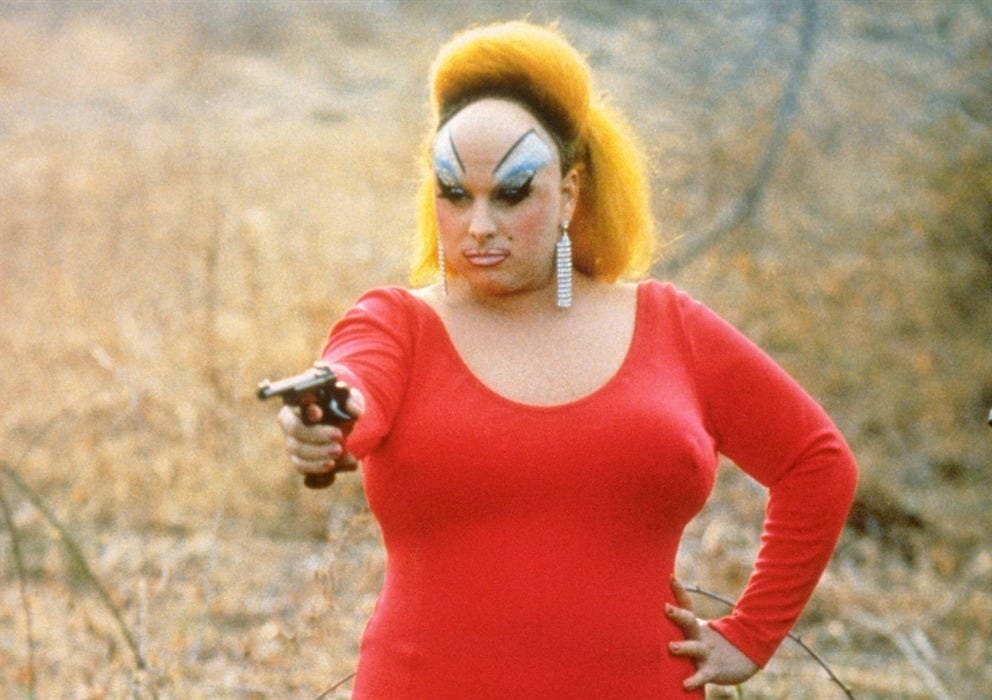
UMS: One thing I love about your work is that, by pushing the boundaries of taste, you challenge this commonly held notion that queer people should make themselves more palatable for the rest of society, in order to “earn” respect. In the half-century since Pink Flamingos released, there’s certainly been an increase of queer stories in mainstream media, but I (personally) feel like a lot of them are guilty of trying to placate everybody at once. How do you feel about respectability politics?
JW: The most ironic thing about my career is that I’m now, I’d say, respectable. The Academy Awards Museum has given me a giant show set for 2023. I’m getting a star on the Hollywood Boulevard. The National Registry listed Pink Flamingos as one of the great American films. All those things are very flattering, and I preserve them with no irony, but it is the exact opposite of how my career started when I got all bad reviews and was arrested for making the movies. And they’re the same! I haven’t changed, but society has, humor has and American humor has.
I think I got away with it for 50 years because I make fun of the rules that people believe outsiders live by—not the rules they’ve led. We have to make fun of ourselves or else we become self-righteous, and that is when we lose the battle. I’m not trying to just “offend”—I’m trying to make people laugh. It’s easy to shock. I try to use shock value to get people’s attention, ‘cause that’s how you’ll change people’s opinions: you make ‘em laugh. They don’t want you preaching and standing on a soapbox. The dumbest thing is to make your audience feel stupid. Even if they are stupid!
UMS: I like what you said about having to be able to make fun of ourselves. Could you expand on this philosophy as it pertains to your work?
JW: I made fun of myself from the beginning by calling my movies “trash.” I based my career on negative reviews that I got. One critic said to me, “you beat us to the typewriter. We can’t say anything ‘cause you’ve already said it!” But I was embracing words that they used against me, the same way all minorities do; they take back that word. One thing that the overly politically correct don’t ever do is make fun of themselves.
I think I actually am politically correct. People choke when I say that, but the right people win in my movies. But I do think that we have to be able to not be so self-righteous about it. That’s the downfall. That’s why your governor wins—because people hear stuff like, “you shouldn’t have a candy cane because it suggests the impoverished shepherd’s crook.”
UMS: This reminds me of a phrase that people online use when someone gets really offended about something unimportant: “touch grass.” Ironically, I saw someone say this was ableist the other day, the reason being that not everyone is able to go outside and do that.
JW: Oh God. Or like, ‘manhole’—you’re not allowed to say that either. You have to call it something else, because it’s “men over women.”
UMS: Really? That’s so funny.
JW: It is funny! But the people that care about it—they don’t think it’s funny. They’re serious, and it makes them more lightweight. In the other direction too, there’s this reactionism.


UMS: I’d like to go back to Pink Flamingos for a moment, since it just turned 50. How do you feel about its lasting impact?
JW: I’ve thought about it. There are [offensive] things in it that don’t seem to matter, because it’s so ridiculous and it’s making fun of all tastes and rules, and everything. It’s about anarchy. The only movie that’s close to Pink Flamingos is Johnny Knoxville’s Jackass. That’s why I put him in my last movie, [A Dirty Shame]. I think he shares that sense of humor, which is based on people’s nervousness and ability to laugh at things that they never laughed about before.
UMS: I’ve always admired your mutual friendship. Did you see the most recent Jackass movie?
JW: I did. I saw it in London on opening day, in an IMAX theater. So we had to look at Steve-O’s testicles larger than I’d ever hoped to see.
UMS: Amazing. Before we go, is there anything you’d like to add that we didn’t cover in this interview?
JW: No! I always tell every journalist, they should teach you to never ask that question in journalism school. If I have to pick the questions, I should get your paycheck too! [laughs]
UMS: That’s fair. I would’ve touched upon Liarmouth more, but it was only just mailed out to me yesterday, so I haven’t had the chance to read it!
JW: We’re gonna talk about it at the Miami Book Fair! I think the book is a page-turner. I think it’s crazy. I think you’ll laugh. I think I’ll startle you, and I think it has a happy ending—a weird happy ending. I haven’t met anybody who said they were bored, and it got (surprisingly) very nice reviews.
UMS: I mean, I can’t imagine getting bored by that subject matter.
JW: You may not like it, but you won’t be bored! ■